Welcome to the GCTLC Library. Use the search and filter options below to find green chemistry education resources and curriculum materials from community members from across the world. You can also submit a new resource to the library. For information for authors and reviewers, please consult the Guidelines for Submission and Review of Learning Objects.
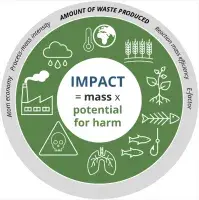
Integrating Simple Environmental Impact-Based Metrics into the Undergraduate Curriculum
The most important learning objective in green chemistry education is the ability to identify the synthesis, process, or chemical that is least environmentally harmful. Existing metrics fall short for different reasons. Mass-based metrics fail to assess environmental harm, while life cycle assessment (LCA) is much too complex to insert into the existing curriculum without displacing a significant ...

Integrating Social Justice into the Chemistry Curriculum: Setting the Ethical Foundation for Future Scientists
Incorporation of social justice into chemistry curricula remains rare despite the recent increase in awareness of equity issues. Social justice topics and pedagogy offer a way towards developing culturally-responsive, inclusive curricula that acknowledges the social facets of scientific knowledge. This chapter describes the creation of an in-depth social justice project that prompted students to ...
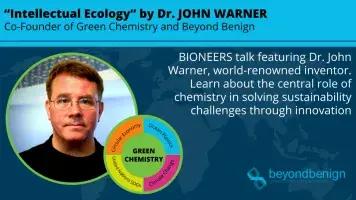
Intellectual Ecology by Dr. John Warner
Dr. John Warner speaks at a Bioneers conference in 2014 on "Intellectual Ecology". This is a great inspirational introductory video for understanding Green Chemistry.
Interdisciplinary Gamified Teaching of Critical Metals
A guide to several tools created by a group of people at the Center for Sustainable Separations of Metals to gamify and introduce the ideas of critical metals.
Maxwell H. Furigay (a), Nikhil S. Chellam (b), Marta Guron (a), Juno Johnson (c), Sarah Bennett (c), Leighton O. Jones (b), Wenqi Liu (b), George C. Schatz (b), Eric J. Schelter (a), J. Fraser Stoddart (b), Shane S. Galley (c), and Jenifer ...

Introduction to Green and Sustainable Chemistry Syllabus
Green and Sustainable Chemistry syllabus adopted from Beyond Benign-Yale UNIDO syllabus template for Prairie View A&M University. Syllabus was updated to include LCAs and Toxicology for Chemist modules.
https://www.beyondbenign.org/curriculum_topic/he-green-chemistry/
https://www.beyondbenign.org/curriculum_topic/he-toxicology/
Introduction to Systems Thinking in Chemistry
This module serves as a foundation and introduction to systems thinking in chemistry classes, introducing key terminology and concepts in systems thinking with specific ties to green and sustainable chemistry concepts and the United Nations Sustainable Development Goals (UN SDGs). The authors created this module to be useful for both instructors and students who may be new to systems thinking in ...
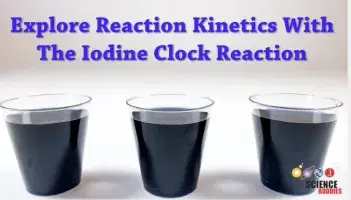
Investigate the Kinetics of the Color Changing Iodine Clock Reaction
The iodine clock reaction is a favorite demonstration reaction in chemistry classes that usually requires toxic or hazardous chemicals. During the reaction, two clear liquids are mixed, resulting in another clear liquid. After some time, the solution suddenly turns dark blue. The reaction is called a clock reaction because the amount of time that elapses before the solution turns blue depends on ...
Investigating Chemistry’s Potential Roles in the Life Cycle of Plastics – An Outreach Laboratory Activity for High School Students
An outreach event for secondary school students has been designed and implemented to demonstrate the potential roles chemistry can play within the life cycle of plastics. This event entailed a short prelab lecture to introduce students to plastics and sustainable chemistry, followed by students performing three different laboratory activities on rotation. In Activity 1, students investigate the ...
Investigation of poly (glycidyl methacrylate-co-styrene) as a curing agent for soy-based wood adhesives
This study explores the synthesis and application of poly(glycidyl methacrylate-co-styrene) (PGS) emulsions as formaldehyde-free curing agents for soy-based wood adhesives. The research demonstrates that PGS, synthesized via emulsion polymerization, effectively enhances the water resistance of soybean flour (SF)-based adhesives used in plywood manufacturing. Key variables such as PGS/SF weight ...
Involving Students in the Greening of the Organic Laboratory Curriculum
Additional Author: Kaitlyn Gerhart
When greening an organic chemistry laboratory, redesigning the course to educate students about green chemistry rather than simply greening the individual experiments is crucial. This chapter describes a process of redesigning the organic chemistry I laboratory from a microscale course into a green chemistry lab. An organic chemistry I laboratory course where ...
Iodination of vanillin and subsequent Suzuki-Miyaura coupling: two-step synthetic sequence teaching green chemistry principles
A two-step synthetic sequence using vanillin was developed for undergraduate organic chemistry labs to replace traditional experiments with greener alternatives. The first step involves iodinating vanillin with Oxone® and potassium iodide in refluxing water, enabling students to analyze substitution positions via ¹H NMR spectroscopy. The iodovanillin is then used in an aqueous Suzuki-Miyaura ...
Iron (Fe) in Vitamins
This is an improvement over a similar lab published in Harris’ Analytical Chemistry text. Instead of using organics to form reddish solutions, the catechins or polyphenolic compounds in green tea form colored complexes with iron. UV-Vis spectroscopy in conjunction with Beer’s law can then be used to determine the concentration of Fe in vitamin tablets.
Other authors: Davis Winn (Georgia Gwinnett ...
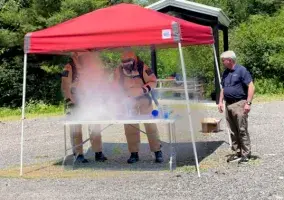
Is your lab safety training - safe?
The article "Is Your Lab Safety Training — Safe?" from the Lab Safety Institute emphasizes that safety training itself must adhere to rigorous safety standards. It highlights a real incident where a chemical demonstration led to an unintended explosion, underscoring the need for thorough risk assessments, appropriate personal protective equipment (PPE), and strict adherence to safety protocols ...
Juneteenth in STEMM and the barriers to equitable science
This article, authored by 52 Black scientists, establishes the context of Juneteenth in STEMM and discusses the barriers Black scientists face, the struggles they endure, and the lack of recognition they receive.
Mays, A., Byars-Winston, A., Hinton, A., Marshall, A. G., Kirabo, A., August, A., Marlin, B. J., Riggs, B., Tolbert, B., Wanjalla, C., Womack, C., Evans, C. S., Barnes, C., Starbird, C ...
Justice and injustice in chemistry: aspirin and other drugs
A two-part high school-aged resource to accompany a practical synthesis of aspirin. The first part includes an individual writing reflection on drugs and the pharmaceutical industry, and a group work activity to watch a video and discuss and share ideas from the writing reflection. Students will also discuss epistemic harm and the origins of medicinal chemistry knowledge. The second part includes ...
Key Elements of Green Chemistry
Green chemistry is becoming one of the most timely and popular chemistry courses taught in schools. In fact, this decade has been listed as the age of “Green Chemistry” according to a recent ACS compilation. As I began teaching it, I decided to develop a "living" text that responds to student interests and needs. The existing third edition of my text, which offers a perspective of the green ...
Lab Waste Audit Toolkit: A step-by-step process to reduce plastic waste in the lab
This guide from Stanford University outlines the steps for conducting a waste audit of non-chemical wastes (gloves, plastics, cardboard, etc.) in the laboratory.
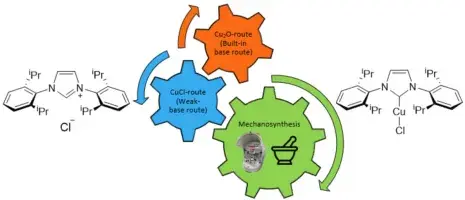
Learning Green Chemistry Principles by Comparing Three Synthetic Routes to a Copper-NHC (NHC = N-heterocyclic carbene) Complex
This resource links to a recent laboratory experiment published in the Journal of Chemical Education by Francis Bru and Catherine S. K. Cazin, highlighting green chemistry principles by comparing three synthetic routes toward a Copper N-heterocyclic carbene complex. It includes the mechanochemical synthesis using a planetary mill and assessments of several green chemistry metrics, including atom ...
Lemonade Lab - Introduction to Green Chemistry Principles
This lesson is for use as part of an introduction to high school chemistry lab. Teachers need to have information on the 12 Principles of Green Chemistry and how to use them to evaluate a lab procedure. They are attached in the appendix to this lab activity. This lesson will be set up as both an at home (remote learning) and in class lab activity taking into account social distancing.
This ...
Make a PET Jellyfish from a Water Bottle
Dean Campbell,* Ali Patel, Emma Stancu
In this activity, participants make a model jellyfish from a disposable plastic water or soda bottle and learn about properties and "green" aspects of plastics. This activity also illustrates the E-factor using the masses of the product and waste in the jellyfish production process.
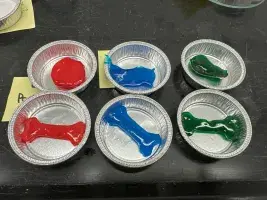
Make It and Break It: Bioplastics from Plant Starch with Incorporation of Engineering Principles
Developed by:
Richard Harris, Carla Ahrenstorff
Gracye Theryo, Aaron Johnson, Cassie Lydon, Cassie Javner,
Jane Wissinger*
Three types of household plant starches (corn, potato, and tapioca) and additives are used to prepare inexpensive, safe, and non-toxic polymeric materials of varying physical properties. The renewable plastic films are explored using tensile testing in order to compare and ...
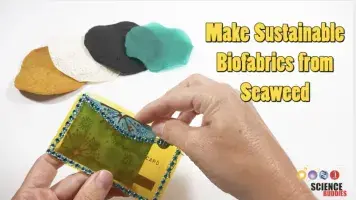
Make Sustainable Fabrics from Seaweed
Can you imagine clothing, handbags, or shoes made from seaweed or spider silk? To become more sustainable, the textile industry is looking for ways to develop more eco-friendly fabrics. Biofabrics derived from living organisms such as seaweed or bacteria have been proposed as a potential alternative to conventional fibers. In this science project, you will make several biofabrics from alginate ...
Making plastic from potato starch
This resource discusses using potatoes to make plastics and investigates the use of plasticizers.
Mannich Reactions in Room Temperature Ionic Liquids (RTILs): An Advanced Undergraduate Project of Green Chemistry and Structural Elucidation
Many people would argue that one of the ultimate goals of green chemistry should be to solely use water as a solvent if a solvent is needed at all. For reactions where water is not an option, a choice must be made from a wide variety of organic solvents. Recently room temperature ionic liquids (RTIL) have been receiving a lot of attention because of their chemical and thermal stability, low vapor ...
Mechanochemistry with Anthocyanin Indicators Using Solid Acids and Bases
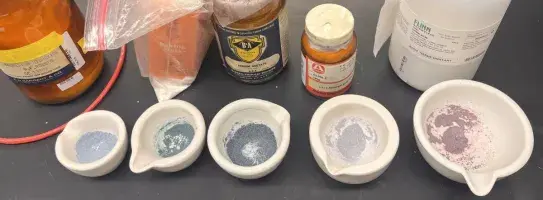
In this activity, dried anthocyanin-containing flowers are combined with acidic, basic, and neutral powders using mortars and pestles in a demonstration of mechanochemistry. Students first research which solids they would like to use for this activity on the basis of maximum efficacy and minimum hazard. The data that they collect are used to inform the instructor as to which chemicals are to be ...
Micelle-Mediated Extraction of Heavy Metals from Environmental Samples: An Environmental Green Chemistry Laboratory Experiment
Analysis of trace metals and organic substances often relies on the use of
organic solvent-based extractions. In this laboratory exercise, students
will use analytical chemistry to determine heavy metals from water samples using a greener, micelle-mediated extraction procedure called cloud-point extraction. Water samples are treated with a chelating agent, ammonium pyrrolidine dithiocarbamate ...
Microwave Synthesis of a Prominent LED Phosphor for School Students: Chemistry’s Contribution to Sustainable Lighting
Scarcer raw materials and climate change are scientific facts that make it necessary to enhance energy efficiency and to recycle raw material. Fundamental researchers at universities as well as in industry agree that light-emitting diodes (LEDs) are the most efficient and sustainable light sources of the future. Chemistry plays a significant role in the development of white, energy-efficient LEDs ...
Microwave-Assisted Heterocyclic Chemistry for Undergraduate Organic Laboratory
Heterocyclic compounds have a wide range of applications and properties. They are often antimicrobial agents, can inhibit specific enzymes, and are generally useful in organic synthesis. This experiment provides instructors with a variety of heterocyclic compounds that can be synthesized quickly with the aid of microwaves. While not a lot of Microwave-Assisted Organic Synthesis (MAOS) is taught at ...
Microwave-Assisted Organic Synthesis in the Organic Teaching Lab: A Simple, Greener Wittig Reaction
Microwave-assisted organic synthesis is becoming a more common laboratory practice. The advantages of using microwave-assisted synthesis include shortened reaction time, lower energy costs, and cleaner reactions. This particular experiment explores a much greener Wittig reaction that doesn't require an inert atmosphere, a strong base (i.e., butyl lithium), or even a solvent. In addition to these ...
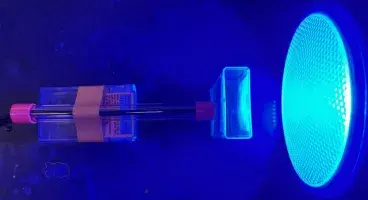
Modeling Solar Disinfection with Turmeric and an LED Lamp
In this activity, participants use a blue LED light to decolorize a yellow solution containing curcumin compounds extracted from the spice turmeric. They will learn how this an analogy for solar disinfection of water, how an LED can be more efficient than other light sources, and how to examine whether a reaction process is 0th, 1st, or 2nd order.
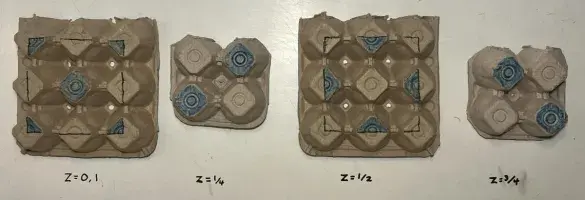
Modeling Unit Cells and Layer Sequences of Solar Cell Materials using Dimpled Packaging
Trays such as those used in food packaging that contain regular arrangements of dimples can be used to represent layers of atoms in solid structures used in solar cell technology. For example, the square array of dimples in transparent plastic mini quiche trays or egg cartons can be used to depict layers within cubic or tetragonal unit cells. Multiple solid structures and ways to model those ...
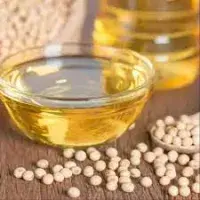
Modification of epoxidized soybean oil for lubricant formulations with improved oxidative stability and low pour point
This peer-reviewed study presents a novel chemical modification strategy for epoxidized soybean oil (ESO) to develop biobased lubricants with improved oxidative stability and low-temperature performance. ESO was ring-opened using alcohols in the presence of sulfuric acid and then esterified with acid anhydrides to yield functionalized fluids. These fluids demonstrated improved pour points (as low ...
Module I. Introduction to Soybean History, Cultivation, and Chemistry
Module I traces the historical journey of the soybean, beginning in China ca. 3,000 years ago, to its cultivation worldwide, including in the United States. While the historical perspective is optional for chemistry educators, a key takeaway is the shift from soybean use primarily as food for humans and animals to its modern applications as a renewable feedstock to replace fossil fuels. This ...
Module IIA. Innovations in Soy Chemistry: Industrial Case Studies
Module II presents seven case studies that highlight the successful replacement of petroleum-based industrial chemicals with renewable soybean oil or meal, demonstrating the application of green principles and sustainable innovation. Each case study is supported by references that allow educators to expand the material or assign readings for students. While each study could be further enriched ...
Module IIB. Exploring Techno-Economic Assessments and Life Cycle Assessments: Environmental versus Economic Evaluations of Soy-based Processes and Products
This module contains four parts that first guide instructors in teaching about and distinguishing between techno-economic assessments and life cycle assessments, then engages students in activities and homework assignments involving soy-based industrial processes. Critical thinking skills and analysis are required and green chemistry metrics and UN Sustainable Development
goals are woven into the ...
Module III. Sustainable Adhesives from Soybean Oil: A Green Chemistry Laboratory Experiment
Module III presents two laboratory experiments drawn from recent primary literature and incorporates novel green chemistry syntheses. The first experiment involves the epoxidation of soybean oil using Oxone® and acetone (to generate dimethyl dioxirane) as the oxidizing agent. This chemistry was introduced in the “Exploring Techno-Economic Assessments” case study and can be paired with that ...
Monitoring local pollutant levels
This resource provided through the Royal Society of Chemistry (RSC) website provides a collection of resources and data for students to see how to access and evaluate real-time data around air pollutants in local regions. In particular, the resource looks at current and historical levels of nitrogen dioxide in various regions throughout the United Kingdom.
This resource is intended for early high ...
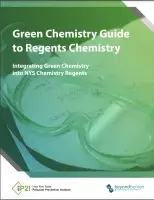
New York State (NYS) Regents Green Chemistry Guide
This document shows how the NYS Chemistry Core Curriculum Performance Indicators and the NYSSLS Performance Expectations for Chemistry are tied to the Beyond Benign Labs that are available for high school students, as well as give some examples for phenomenon and storylines that can be used in the classroom. This document helps to integrate green chemistry and NYS Regents standards into your NYS ...
News from Online: Renewable Resources
Sustainability is an undeniably important issue that any educator who teaches green chemistry must at some point address. This collection of web resources is not only a great reference to aid in curriculum preparation, but it also briefly discusses some of the challenges that the world faces in light of limited resources and a growing population.
The review includes a short summary of green ...
Novel Interdisciplinary Systems-Based Approach to Teaching Sustainability in Plastics
This is an article published in J Chem Ed about a novel way to teach systems thinking in a non-majors chemistry course called "Perspectives on Plastic".
Authors: Marta Guron and Alexis Slentz
https://doi.org/10.1021/acs.jchemed.1c00192
Ocean Plastics
In this interactive, discussion-driven lesson, students explore the global problem of plastic pollution in the ocean and investigate how green chemistry and biomimicry can provide innovative solutions. Students examine the life cycle of plastics, identify common types of ocean plastic and microplastics, and discuss the limitations of recycling alone. The lesson culminates in a hands-on activity ...
Octanol–Water Partition Coefficient Measurement by a Simple 1H NMR Method
This article describes a simple approach for measuring the octanol-water partition coefficient (Kow) of organic compounds using a simple miniature variation of the shake-flask method in an NMR tube, which can be quickly analyzed using a benchtop 1H NMR spectrometer. The article also details the scope and limitations of the method. Kow is an important metric for understanding bioaccumulation and ...
One-Pot Synthesis of 7-Hydroxy-3-carboxycoumarin in Water
Coumarins represent an important class of natural and synthetic derivatives with interesting biological activities. The 3-carboxycoumarins have been intensely studied because new functionalities can be easily added via the carboxyl group. During this laboratory exercise, students prepare 7-hydroxy-3-carboxycoumarin using a one-pot, multi-step procedure in the absence of organic solvents. By using ...
One-step acrylation of soybean oil (SO) for the preparation of SO-based macromonomers
This Learning Object explores a Green Chemistry approach to creating renewable, bio-based materials. Based on "One-step acrylation of soybean oil for the preparation of SO-based macromonomers" introduces an efficient, one-step method for acrylating soybean oil using acrylic acid and BF₃·Et₂O as a catalyst. The process avoids multi-step syntheses, enhances atom economy, and produces macromonomers ...
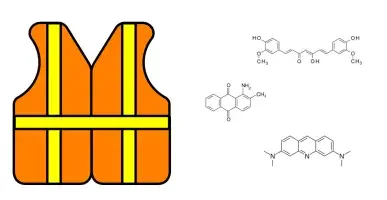
Orange is the Color of Warning
Orange is widely used in safety and warning contexts due to its high visibility. Traffic cones, life vests, and hazard signs feature orange to signal caution. It appears in construction zones, biohazard labels, and emergency signals. Its association with fire and urgency makes it a universal color for alertness and danger.
Although their colors may appear the same, the dyes and pigments used to ...
Organic Chemistry
This module is part of a collection of nine green chemistry teaching modules developed in the early 2000s by a team of faculty (Donna Narsavage-Heald, Trudy Dickneider, David Marx, Timothy Foley, Joan Wasilewski) led by Michael Cann at the University of Scranton and has been migrated to the GCTLC. The subjects of the modules are based on winners of the Green Chemistry Challenge Awards. The modules ...
Organic Chemistry II Lesson Plans
The lesson outlines for the second semester of organic chemistry (Klein, Organic Chemistry, 4th ed) contain lesson objectives, homework problems (H) and in-class problems (B) to engage students. Selected lessons feature "green" organic reactions specific to the chapter coverage.
Organic chemists: contributing to food production | 16–18 years
This resource highlights how organic chemistry contributes to agriculture.