Learning Green Chemistry Principles by Comparing Three Synthetic Routes to a Copper-NHC (NHC = N-heterocyclic carbene) Complex

Learning Green Chemistry Principles by Comparing Three Synthetic Routes to a Copper-NHC (NHC = N-heterocyclic carbene) Complex
Contributors
Assistant Professor, Teaching Stream | University of Toronto, St. George Campus
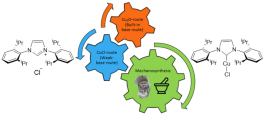
Abstract from article showing three possible routes towards a Cu-NHC complex.
Summary
This resource links to a recent laboratory experiment published in the Journal of Chemical Education by Francis Bru and Catherine S. K. Cazin, highlighting green chemistry principles by comparing three synthetic routes toward a Copper N-heterocyclic carbene complex. It includes the mechanochemical synthesis using a planetary mill and assessments of several green chemistry metrics, including atom economy, environmental factor, mass intensity, reaction mass efficiency, optimum efficiency, and Green Star analysis.
Learning Goals/Student Objectives
- introduce students to green chemistry principles and metrics
- assess solvents and solvent use
- introduce students to mechanochemical principles
- teach students green chemistry metrics
Object Type
Laboratory experiment
Journal articles
Audience
Upper/Advanced Undergraduate
Other Faculty Educators/Teachers
Common pedagogies covered
Hands-on learning
Green Chemistry Principles
Waste Prevention
Atom Economy
Safer Solvents and Auxiliaries
Design for Energy Efficiency
Use of Renewable Feedstocks
Safety Precautions, Hazards, and Risk Assessment
Details are provided in the article. Standard personal protective equipment is required. Several solvents are flammable and toxic. Toluene may damage organs, and dichloromethane is toxic. Copper salts can be harmful and irritants, and the toxicology of their NHC complexes has not been thoroughly investigated.
Teacher Recommendations or Piloting Data (if available)
Performed twice with 34 students at Ghent University, Belgium

Share This

Submitted by

Published on
Moderation state
Published
Time required (if applicable)
Two 3-hour Periods