"Case studies are used to demonstrate to students the interplay of chemical, environmental health, regulatory, and business considerations that dictate chemical process and product design."
At the level of Normal Expectations in the ACS guidelines, educators are expected to use case studies to demonstrate the interplay of various considerations in chemical research, manufacturing, and beyond. Through these case studies, students learn a deeper appreciation and understanding of how green chemistry and sustainability play an important role across many different aspects of chemical product and process design.
Cases and Cases of Cases
There are many resources available online that provide case studies and examples of chemical products and processes in action. Some are related to greener chemical product design, while others are related to chemical spills or disasters and the subsequent environmental or human health impacts. Some are not specifically related to green or sustainable chemistry but could provide an opportunity to be viewed or discussed from a green chemistry and/or sustainability lens. Regardless, the following list of resources gives a starting point for many educators and chemistry programs looking to meet the requirements at this level of the ACS guidelines.
- The ACS Green Chemistry Learning Modules provide a great starting point for teaching fundamental chemistry concepts through the lens of green and sustainable chemistry. The modules contain numerous "real-world" examples of chemistry and green chemistry in action. These modules will eventually be available in the GCTLC's searchable library as linked resources.
- Beyond Benign's website has a number of case studies for download, although they are a different type of case study in that they examine alternative approaches for performing undergraduate laboratory experiments by making them greener. In particular, see the general chemistry lab examples and organic chemistry lab examples, as well as the Guide to Green Chemistry Experiments for Undergraduate Organic Chemistry Labs. More case studies from Beyond Benign and our community members will be available in the GCTLC library soon.
- The National Science Teachers Association (NSTA) has an online library of case studies, created and curated by the National Center for Case Study Teaching in Science (NCCSTS). While these case studies cover many areas of science they are filterable by field and many of the chemistry-specific ones relate to green and sustainable chemistry.
- The Real-World Cases in Green Chemistry - Volume 1 and Volume 2 - provide examples of greener chemical process and product design from nominated and awarded projects of the Presidential Green Chemistry Challenge Awards. These cases still provide useful examples to researchers and educators despite the first volume having been written over 20 years ago. Dr. Michael Cann, Distinguished Professor of Chemistry Emeritus at the University of Scranton, was an author on both volumes and created a series of teaching modules based on these case studies. They are currently being migrated to the GCTLC's library and will be available here soon.
- Molecular CaseNet has a series of case studies available through the QUBES platform, maintained by our colleagues at the BioQUEST Curriculum Consortium. While more specifically geared towards biochemistry and biology, many of the case studies overlap closely with the chemical sciences.
More resources will be added here overtime as they are identified. You can recommend resources and links for inclusion through the "Green Chemistry Resources for Addressing the ACS Guidelines" forum on the GCTLC.
GCTLC Library
Below is a list of resources from the GCTLC library that are tagged as "Case Studies" at the introductory or upper undergraduate level. These can provide a good starting point for educators looking to integrate case studies into their existing lectures, and many are designed to be modular for a simpler "drag-and-drop" approach (without detracting from content already being covered in the class). As more resources are added to the GCTLC with the same tags, they will appear on this page. However, you can always find more resources directly in the GCTLC's searchable library.
01 - History and Principles of Toxicology - (Toxicology for Chemists Curriculum - Module 1)
This module serves as a good first introduction to toxicology. In the first part of the module, students will learn and understand: the history of toxicology and its underlying principles; the progression of toxicology as a science; the development of regulatory agencies; key case studies that developed the field; and the paradox of uncertainty. In the second part of the module, students will ...
02 - Understanding Hazard and Risk (Toxicology for Chemists - Module 2)
This module is an introduction to understanding the principles of hazard and risk. The lectures are designed with a “choose your own adventure” format: you can take any slides and use them in any order to build your lecture! Using these materials, students will understand the basic concepts of hazard, exposure, and risk; be able to perform a simple chemical hazard assessment; be able to compare ...
06 - Toxicity of Metals (Toxicology for Chemists - Module 6)
This module is a good introduction to metal toxicity. Students will learn about the toxicity of metals in the body, metal pollution, the difference between metals and metalloids, mechanisms of heavy metal toxicity, and factors that affect metal toxicity. These lecture slides are heavily case-study based and provide an applied outlook on the chemistry with reference to many global incidents and ...
07 - Environmental Fate, Persistence, and Biodegradation (Toxicology for Chemists - Module 7)
This module contains an introduction to the concepts of fate, persistence, and biodegradation. Students will learn about: classes of molecules that persist in the environment; different types of degradation and their critical role in the environment and society; and parameters that affect biodegradation rate. Part II of this module is a full case study entirely based on the Deepwater Horizon oil ...
08 - Environmental Toxicology (Toxicology for Chemists - Module 8)
This module serves as an introduction to the principles of environmental toxicity: air pollution, water pollution, and chemical transport and fate. Using these materials, students will learn examples of pollutants and their effects on human health and the environment through multiple case studies and in-class discussions. These lecture slides comprise mostly case studies and provide a good outlook ...
12 - Case Studies, ChemToxTidbits, “Grab Bag” Folder (Toxicology for Chemists - Module 12)
Don’t have much time to prepare your lectures? Don’t know where to start with incorporating toxicology into existing class lectures or assignments? Not sure if you’re ready to adopt a full module? Do you just want access to the case studies, in-class assignments, homework assignments, and ChemToxTidbits slides? This folder contains all of these materials in a format easily accessible to you so ...

3D-Printable Biobased Eutectogels Based on Soybean Oil and Natural Deep Eutectic Solvents for Underwater EMG Recording
This study presents the development of 3D-printable biobased eutectogels that integrate acrylated epoxidized soybean oil (AESO) with natural deep eutectic solvents (DES) to create hydrophobic, conductive soft materials suitable for underwater electromyography (EMG) recording. The research explores the tunability of the eutectogels' mechanical, electrochemical, and water-repellent properties by ...

A guidebook for sustainability in laboratories
This guidebook aims to improve lab users’ everyday practices to become more sustainable. Specifically, this guidebook provides practical suggestions on how to effectively use lab instruments and resources and how to acquire data. We provide advice to labs covering disciplines such as biology, chemistry, computational science, engineering, life sciences, materials sciences, medicine, pharmacy, and ...
A new formaldehyde-free wood adhesive from renewable materials
This study presents the development and evaluation of a formaldehyde-free wood adhesive composed of soy flour (SF) and a novel curing agent (CA) synthesized from epichlorohydrin (ECH) and ammonium hydroxide. The adhesive was tested on various plywood configurations (seven-ply, five-ply yellow poplar, and five-ply aspen) and assessed for water resistance using standardized soak and boil tests. The ...
A new method of making particleboard with a formaldehyde-free soy-based adhesive
This study presents a novel method for producing particleboard using a formaldehyde-free adhesive composed of soy flour (SF) and a curing agent (CA). Traditional soy-based adhesives are too viscous for direct application in particleboard manufacturing. To overcome this, the researchers developed a two-step process: first coating wood particles with a dilute soy slurry, followed by drying and ...
Advancing sustainable chemistry education: Insights from real-world case studies
This article looks at the integration of innovative teaching methodologies through two case studies: “Plasticized Childhood” (exploring the environmental and health impacts of plastic toys) and “Unpacking Burgers” (a look into the complexities of plant-based meat alternatives). The Classroom Observation method was used to analyze and observe student interactions and learning outcomes while ...
Amines in Pharmaceutical Synthesis
This module explores the synthesis of amines with a focus on the reductive amination reaction. Numerous examples from the discovery and commercial manufacturing of pharmaceuticals are included. After an introduction to traditional reductive amination methods, students evaluate the traditional methods using green chemistry principles and systems thinking approaches. Students also compare ...
An Easy-to-Use Template for Creating Green Chemistry Case Studies for Teaching
This easy-to-use template package is designed to help you create case studies using examples of real-world chemistry to teach students about green chemistry and sustainability. Most of the documents in this package come in pairs. One document in each pair is a workbook file while the other is a user guide. The workbook files include questions designed to help organize your thoughts and ideas as ...
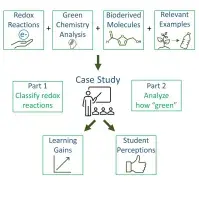
Case study assessment using biobased 5-hydroxymethylfurfural to teach redox reactions in undergraduate organic courses
Abstract: This paper addresses the development and evaluation of a case study designed to introduce both the core chemistry concepts of oxidation and reduction reactions as well as green chemistry within the undergraduate organic chemistry curriculum. The developed case study consisted of two parts that can be used in tandem or independently. Part 1 focused on calculating oxidation states and ...
Challenges and Opportunities for Implementing Green Chemistry in Nigerian Universities: Educational and Policy Perspectives
This study examines the emergence of green chemistry in Nigerian universities through analysis of perspectives from an eight-member focus group of experts in Nano chemistry, green chemistry, and chemistry education. The six-hour discussion evaluates awareness levels, implementation barriers, and future prospects. While participants recognize the importance of green chemistry, several challenges ...
Chemical Kinetics
This module teaches fundamental concepts in chemical kinetics for General Chemistry using examples of water quality and water treatment. Key chemistry topics include concentration vs. time data; rate constants (k); reaction order; rate law expressions (including integrated rate laws); determining rates, rate laws, and rate constants from graphical and/or tabulated data; half-life; Arrhenius ...
Comparison between Sunflower Oil and Soybean Oil as Gear Lubricant
This study evaluates the use of sunflower oil and soybean oil as eco-friendly alternatives to synthetic gear lubricants in helical gear systems. Conducted using a gear test rig, the research measured kinematic viscosity and viscosity index of both oils over 80 hours of operation. Findings revealed that while both oils possess high viscosity indices and perform well at high temperatures, sunflower ...

Effects of the use of soybean oil as cutting fluid on the surface finish for turning operations
This learning object investigates the use of soybean oil as a sustainable alternative cutting fluid in machining processes. Conventional mineral oil–based cutting fluids pose environmental and health concerns due to their non-biodegradability and potential toxicity. In this study, soybean oil, a renewable and biodegradable resource, is applied during machining to evaluate its effects on surface ...
Enzyme-based processing of soybean carbohydrate: Recent developments and future prospects
The work highlights the underutilized potential of soybean carbohydrates, which constitute 26–30% of the dried bean. Unlike protein and oil, soybean carbohydrates are difficult to process and can cause anti-nutritional effects in food and feed. The review details how enzyme-based processing—particularly carbohydrases and related enzymes—offers sustainable and efficient alternatives to conventional ...
Evaluation of a high oleic soybean oil variety in lubricant and biodiesel applications
This study explores the potential of soybean oil varieties—commercial soybean oil, Ellis, and a newly developed high oleic acid soybean variety, TN18-4110—for use in biodiesel and lubricant applications. Conventional soybean oil is rich in polyunsaturated fatty acids, which can negatively affect oxidative stability and cold flow properties. In contrast, TN18-4110, enriched in oleic acid ...
Exploration of the complementary properties of biobased epoxies derived from rosin diacid and dimer fatty acid for balanced performance
This learning object explores the synthesis, characterization, and performance evaluation of biobased epoxies derived from rosin diacid and dimer fatty acid, focusing on their complementary mechanical, thermal, and curing properties. The study presents a modified two-step synthesis of diglycidyl ester-type epoxies using calcium oxide as a water scavenger to improve yield and epoxy content. The ...
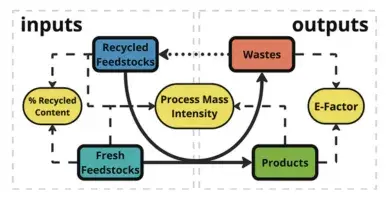
Explore Material Efficiency and Sustainability with Green Chemistry Metrics
This short communication explores using simple sustainability metrics to explore data from mass balances (e.g. amount of products, feedstocks, and wastes). It explores how educators and researchers can easily calculate three metrics (process mass intensity, recycled content, and e-factor) to discuss efficiency and circularity together.
Within the article, there is also a case study exploring how ...
Exploring Sustainable Practices in Metal Plating: The Drive for Greener Innovations - A case study
The Drive for Greener Innovations case study module, consisting of six lesson units, is designed to highlight for students the interplay of chemical, environmental health, regulatory, and business considerations that dictate chemical processes and product design. Using the metal plating industry as a case study, the module also explores the chemistry and toxicology of hazardous chemicals ...

Frictional analysis on engine lubricant dilution by coconut oil and soybean oil derived biodiesel
This study investigates the tribological (frictional) behavior of engine lubricants diluted with biodiesel derived from coconut oil (CME) and soybean oil (SME). As concerns grow over fossil fuel depletion and greenhouse gas emissions, biodiesel is explored as a renewable, lower-emission alternative. However, its use in compression ignition engines can lead to lubricant dilution, potentially ...
Green Chemistry and Toxicology Moments - slide set part A
The Green Chemistry and Toxicology Moment slides (slide set part A) are standalone slides that can be easily and seamlessly inserted into general chemistry and/or organic chemistry lectures. Most of the topics just have one slide but a few have two slides. There is a wide range of topics; from Vaping and Lung Injury to Safer Epoxidations. These slides are meant to engage the students ...

Green Chemistry University Course: Lecture 13 – Real-World Cases in Green Chemistry
In this class, students will learn about successful Green Chemistry technologies that have been awarded by the United States Environmental Protection Agency. Students will have the opportunity to research previous winners and discuss with their fellow classmates.
This course was developed and authored by:
Philip Coish
Kimberly Chapman
Paul Anastas
Seon Augusto Ferreira
Karolina Mellor
Amy Cannon ...

Green Chemistry: Principles and Case Studies
Green chemistry as a discipline is gaining increasing attention globally, with environmentally conscious students keen to learn how they can contribute to a safer and more sustainable world. Many universities now offer courses or modules specifically on green chemistry – Green Chemistry: Principles and Case Studies is an essential learning resource for those interested in mastering the subject ...
Investigation of poly (glycidyl methacrylate-co-styrene) as a curing agent for soy-based wood adhesives
This study explores the synthesis and application of poly(glycidyl methacrylate-co-styrene) (PGS) emulsions as formaldehyde-free curing agents for soy-based wood adhesives. The research demonstrates that PGS, synthesized via emulsion polymerization, effectively enhances the water resistance of soybean flour (SF)-based adhesives used in plywood manufacturing. Key variables such as PGS/SF weight ...
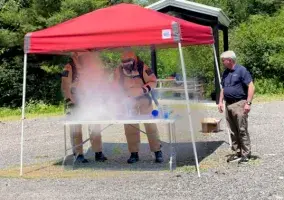
Is your lab safety training - safe?
The article "Is Your Lab Safety Training — Safe?" from the Lab Safety Institute emphasizes that safety training itself must adhere to rigorous safety standards. It highlights a real incident where a chemical demonstration led to an unintended explosion, underscoring the need for thorough risk assessments, appropriate personal protective equipment (PPE), and strict adherence to safety protocols ...
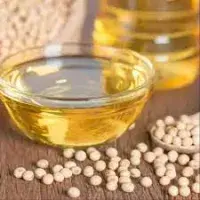
Modification of epoxidized soybean oil for lubricant formulations with improved oxidative stability and low pour point
This peer-reviewed study presents a novel chemical modification strategy for epoxidized soybean oil (ESO) to develop biobased lubricants with improved oxidative stability and low-temperature performance. ESO was ring-opened using alcohols in the presence of sulfuric acid and then esterified with acid anhydrides to yield functionalized fluids. These fluids demonstrated improved pour points (as low ...
Module IIA. Innovations in Soy Chemistry: Industrial Case Studies
Module II presents seven case studies that highlight the successful replacement of petroleum-based industrial chemicals with renewable soybean oil or meal, demonstrating the application of green principles and sustainable innovation. Each case study is supported by references that allow educators to expand the material or assign readings for students. While each study could be further enriched ...
Module IIB. Exploring Techno-Economic Assessments and Life Cycle Assessments: Environmental versus Economic Evaluations of Soy-based Processes and Products
This module contains four parts that first guide instructors in teaching about and distinguishing between techno-economic assessments and life cycle assessments, then engages students in activities and homework assignments involving soy-based industrial processes. Critical thinking skills and analysis are required and green chemistry metrics and UN Sustainable Development
goals are woven into the ...
One-step acrylation of soybean oil (SO) for the preparation of SO-based macromonomers
This Learning Object explores a Green Chemistry approach to creating renewable, bio-based materials. Based on "One-step acrylation of soybean oil for the preparation of SO-based macromonomers" introduces an efficient, one-step method for acrylating soybean oil using acrylic acid and BF₃·Et₂O as a catalyst. The process avoids multi-step syntheses, enhances atom economy, and produces macromonomers ...
Polymers from Soybeans: The transesterification of triglycerides
This case study explores the transesterification of triglycerides from soybean oil into a variety of vinyl monomers - soy-based acrylic monomers (SBAs). This transesterification uses commercially available N-(hydroxyethyl)acrylamide as a reactant, was carried out in one synthetic step, ran at room temperature (minimizing energy use), and used only a catalytic amount of sodium hydroxide. These ...
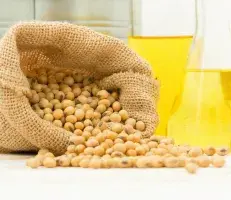
Preparation and Properties of Lubricant Basestocks from Epoxidized Soybean Oil and 2-Ethylhexanol
This learning object explores the preparation and characterization of lubricant basestocks synthesized from epoxidized soybean oil (ESO) and 2-ethylhexanol (2-EH). The study investigates the reaction pathways—primarily epoxy ring-opening and transesterification—using different catalysts, and evaluates the resulting products in terms of viscosity, pour point, viscosity index, and oxidative ...
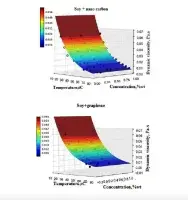
Rheological Properties of Soybean Oil with Nano Additives: A Comprehensive Analysis
This Learning Object introduces students to the rheological behavior of soybean oil with nano-additives (graphite, graphene, and nanocarbon) as a pathway to developing biodegradable lubricants. Using experimental data and mathematical modeling (power law and temperature-dependent viscosity equations), the study examines how nano-additives influence viscosity, thixotropy, and flow properties. This ...
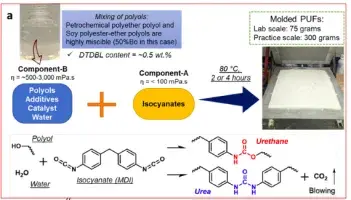
Scalable manufacturing and reprocessing of vitrimerized flexible polyurethane foam (PUF) based on commercial soy polyols
This Learning Object introduces students to Green Chemistry principles through a case study on recyclable flexible polyurethane foams (PUFs) using renewable soy-based polyols. Based on “Scalable manufacturing and reprocessing of vitrimerized flexible polyurethane foam (PUF) based on commercial soy polyols” the study demonstrates how commercial soy polyols can partially replace petrochemical ...
Soy-Based Chemicals and Materials: Growing the Value Chain
This review chapter "Soy-Based Chemicals and Materials: Growing the value chain" documents the use of soy as a biomaterial and green alternative to traditional feedstocks. Within this article, current industrial uses of soybeans are discussed including solvents, oleochemicals and surfactants, paints, coatings, inks, plastics, plasticizers and others are highlighted. Then, four of the Presidential ...
Students Learn Green Chemistry by Taking On Real-World Sustainability Challenges
In this episode, Professor Glenn Hurst takes his students at the University of York out into the world so they can see firsthand how their training in chemistry and chemical engineering can be channeled to help tackle sustainability challenges.
Along the way, the students learn the value of community engagement and evaluate their green chemistry and green engineering solutions in the context of ...
Styrene-Free Soybean Oil Thermoset Composites Reinforced by Hybrid Fibers from Recycled and Natural Resources
This study introduces a sustainable, styrene-free thermoset composite derived from acrylated epoxidized soybean oil (AESO) and reinforced with hybrid fibers sourced from recycled PET, bamboo, polyester, and ethylene-propylene (ES) fibers. To replace toxic and volatile styrene, the researchers synthesized glyceryl trimethacrylate (GTMA) from biodiesel-derived glycerol as a bio-based reactive ...
The Olin Chemical Superfund Site Case Study
The Olin Chemical Superfund Site case study module consists of four lesson units and a classroom follow-up activity, designed to introduce students to the U.S. EPA’s Superfund Program and the history of the chemical industry. It also delves into the toxicology of chemicals released into the environment, while helping students explore green chemistry innovations that aim to eliminate the use of ...
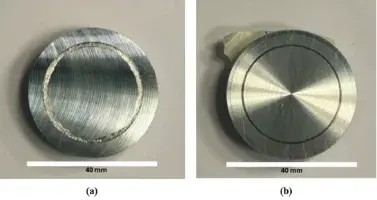
Thermo-rheological and tribological properties of low- and high-oleic vegetable oils as sustainable bio-based lubricants†
This learning object explores the thermo-rheological and tribological behavior of various vegetable oils—specifically low- and high-oleic soybean oil, high-oleic sunflower, safflower, and canola oils—as sustainable alternatives to petroleum-based lubricants in metal machining. The study evaluates key properties such as viscosity index, flow behavior index, flow activation energy, specific heat ...
Voices of Black Talent in Chemistry: Retention Strategies and Personal Success Stories
This article presents the issues and barriers to retention of black talent in the field of chemistry and offers solutions and personal insights from black students, faculty, staff, and industry scientists in the chemistry space.
Voices of Black Talent in Chemistry: Retention Strategies and Personal Success Stories
Thais Scott, Davina Adderley, Yasmin Ali, Michael Amanuel, Alexis Blake, Makalya ...