Welcome to the GCTLC Library. Use the search and filter options below to find green chemistry education resources and curriculum materials from community members from across the world. You can also submit a new resource to the library. For information for authors and reviewers, please consult the Guidelines for Submission and Review of Learning Objects.

Acids, Bases, and pH
This lab is intended to introduce students to the concepts of acids, bases, and pH. Students determine the best suitable natural indicators to test the pH of the various household products and substances.
Add ocean acidification to your existing lessons
This resource provides an overview of ways to discuss ocean acidification with high school students (14-16 years), including connecting increasing levels of carbon dioxide in the atmosphere with absorption by the oceans and the resulting increase in ocean pH. Topics include understanding pH as a logarithmic scale, the nature of acids (strong vs. weak), and connecting these topics to the U.N ...
Add sustainable management of water to your existing lessons
This page through the Royal Society of Chemistry (RSC) website provides a collection of curriculum resources for high school-level students focused on the sustainable management of water. It includes a downloadable practical and simple microbiology experiment looking at the antimicrobial properties of halogens, as well as additional reading and information for putting water scarcity and management ...
Advanced Biomimicry Matching Game
In this interactive activity, students deepen their understanding of biomimicry and green chemistry by matching biological organisms to real-world technologies inspired by nature. Working collaboratively, students analyze how animals and plants solve challenges related to adhesion, energy efficiency, water capture, and materials performance without hazardous chemicals or excess waste. The activity ...
Advanced Organic Chemistry
This module is part of a collection of nine green chemistry teaching modules developed in the early 2000s by a team of faculty (Donna Narsavage-Heald, Trudy Dickneider, David Marx, Timothy Foley, Joan Wasilewski) led by Michael Cann at the University of Scranton and has been migrated to the GCTLC. The subjects of the modules are based on winners of the Green Chemistry Challenge Awards. The modules ...
Advancing sustainable chemistry education: Insights from real-world case studies
This article looks at the integration of innovative teaching methodologies through two case studies: “Plasticized Childhood” (exploring the environmental and health impacts of plastic toys) and “Unpacking Burgers” (a look into the complexities of plant-based meat alternatives). The Classroom Observation method was used to analyze and observe student interactions and learning outcomes while ...
Alcohols
This module uses simple alcohols as the primary examples to supplement the standard organic topics of physical properties, intramolecular forces, base stability, and an introduction to mechanism arrows. This module is designed to be taught in consecutive class periods of one week early in the Organic I term. Students need to be familiar with basic naming and hybridization. There are three units: 1 ...
Alkene Isomerization Using a Solid Acid as Activator and Support for a Homogeneous Catalyst
In this laboratory experiment, students explore the use of an immobilized Ni[P(OEt)3]4H2SO4 catalyst system to study the isomerization of 1-octene to trans- and cis- 2-octene. Nafion-H+ is a solid acid ion exchange polymer that both activates the air-sensitive transition metal catalyst and immobilizes the cationic species that can be characterized by UV-vis spectroscopy within the polymer matrix ...
Alternative Solvents for Green Chemistry
This book provides an overview of solvents and their greener alternatives, including in applications such as synthetic chemistry, purification, analytical chemistry, materials science, catalysis, and more. It also provides some of the latest evidence from the time of research into "greener" solvents, including switchable solvents and biosolvents, as well as areas of interest such as naturally ...
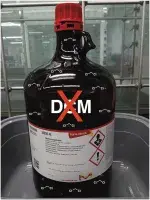
Alternatives to Dichloromethane (DCM) for Teaching Laboratories
This is a Commentary published as open-access in the Journal of Chemical Education in 2025 by Angela Milo, Lijinghan Chen, Kyle Grice, and David Vosburg. It explains why teaching laboratory instructors may wish to avoid using the toxic and regulated solvent dichloromethane (DCM) and offers suggestions for how to eliminate its use and identify alternative solvents for reactions, extractions, and ...
Amines in Pharmaceutical Synthesis
This module explores the synthesis of amines with a focus on the reductive amination reaction. Numerous examples from the discovery and commercial manufacturing of pharmaceuticals are included. After an introduction to traditional reductive amination methods, students evaluate the traditional methods using green chemistry principles and systems thinking approaches. Students also compare ...
An Asymptotic Approach to the Development of a Green Organic Chemistry Laboratory
This article provides a rationale and stepwise process for evaluating and improving the "greenness" of an undergraduate organic chemistry laboratory curriculum. After emphasizing the educational value of sharing this process with students, effective risk assessment is discussed as an important tool for both evaluating and redesigning laboratory exercises. The greening process is illustrated by ...
An Easy-to-Use Template for Creating Green Chemistry Case Studies for Teaching
This easy-to-use template package is designed to help you create case studies using examples of real-world chemistry to teach students about green chemistry and sustainability. Most of the documents in this package come in pairs. One document in each pair is a workbook file while the other is a user guide. The workbook files include questions designed to help organize your thoughts and ideas as ...
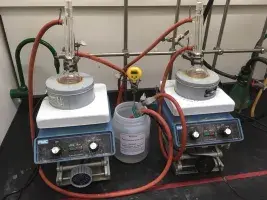
An Inexpensive Aquarium Pump Water Recirculator for the Teaching Laboratory
The design and operation of a simple and inexpensive water recirculator is described, which can replace wasteful running water "tap-to-drain" applications such as providing cooling to Liebig-type (water jacket) condensers. The recirculator uses an inexpensive and easily acquired aquarium pump placed within a large plastic jar or bucket. Data is provided for the estimated water saved per hour ...
An Innovation Studio Leans into the Power of Green Chemistry
Schoolab is an innovation studio that pairs student teams with corporate partners to solve real-world business & design challenges. In the US, they run a program at the University of California Berkeley called "Deplastify the Planet."
Recently it became clear that the sustainable design solutions they were trying to create would benefit tremendously from taking their design thinking all the ...
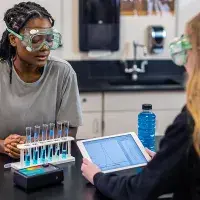
Analyzing Sports Drinks with Beer's Law in a Green Chemistry Lab
In this experiment, students use a Go Direct® SpectroVis® Plus Spectrophotometer to determine the concentration of FD&C Blue #1 food dye in various sports drinks through spectrophotometric analysis. By preparing dilutions of the dye and creating a calibration curve, students apply Beer's Law to measure dye concentrations accurately.
The activity emphasizes green chemistry principles by promoting ...

Animal Adaptations and Engineering Design Unit Overview
In this unit, students will explore examples of biomimicry technologies and examine traits that have enabled animals to adapt to their environment. Students will then consider how animal adaptations can help them design a shelter that would withstand severe weather conditions.

Animal Adaptations and Engineering Design: 01 Form and Function
In this lesson, students will take an active role in understanding adaptations and evolution as they evaluate the effectiveness of various bird beaks for different kinds of food. This lesson will set the stage for the rest of the unit as students learn that function is the intersection of biology, chemistry, and design.

Animal Adaptations and Engineering Design: 02 ABC’s of Biomimicry
This lesson introduces biomimicry and connects animal adaptations to examples of technologies inspired by animal forms. Students decode the word biomimicry and learning about its relevance through assigned readings.

Animal Adaptations and Engineering Design: 03 Animal Homes
In this lesson, students will be asked to research animal homes from different environments. They will use their research in the final lesson of the unit to design a shelter based on animal homes that would keep them safe when exposed to severe weather.

Animal Adaptations and Engineering Design: Lesson 04: Building with Biomimicry
Using biomimicry for ideas, scientists and engineers can create sustainable solutions for a vast range of problems. Scientists consider how plants and animals create a material or perform a process, and engineers then use that information to create inventions that are scalable to meet the needs of people
Antibacterial properties of the halogens
This two-part microbiology practical investigation introduces students to the antibacterial properties of halogen solutions and their use for water treatment from contaminated sources.
Approaches to Incorporating Green Chemistry and Safety into Laboratory Culture
This is an open access article linked from the Journal of Chemical Education article. It highlights a systems thinking approach to incorporating green chemistry and safety into laboratory culture. This article, emphasizes how framing green chemistry through the lens of systems thinking can build a culture of safety in the laboratory.
Aqueous-Phase Palladium-Catalyzed Coupling. A Green Chemistry Laboratory Experiment
This experiment highlights both the importance of palladium-catalyzed coupling reactions and the need for finding greener solvents. The aqueous-phase coupling of iodobenzene and diethylphosphite is a great example of how a reaction can be made greener with a relatively straightforward modification. By simply sulfonating triphenylphosphine, students will be synthesizing a water-solubilizing ligand ...
Are Mushrooms the New Plastic?: Ecovative Design Challenge
In this interactive, discussion-based activity, students compare the life cycles of traditional polystyrene (Styrofoam) products with Ecovative’s mycelium-based materials to understand how green chemistry and biomimicry enable safer, more sustainable product design. Using life cycle cards and guided questioning, students explore renewable feedstocks, energy use, waste generation, and end-of-life ...
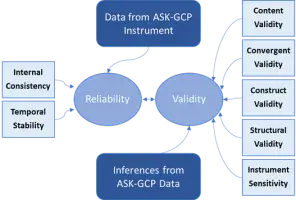
Assessment of Student Knowledge of Green Chemistry Principles
The following abstract is excerpted from the linked external resource.
"As implementation of green chemistry into university-level courses increases, it is vital that educators have a tool to rapidly measure student knowledge of green chemistry principles. We report the development of the Assessment of Student Knowledge of Green Chemistry Principles (ASK-GCP) and evaluation of its sensitivity ...
Bees, Bananas, Benign - Green Chemistry Poster
Poster promoting green chemistry.
Isoamyl acetate is used in many products, adding banana flavor to food, providing a sweet smell, or serving as an ingredient in varnishes. The trouble is that isoamyl acetate is synthesized through the Fischer esterification reaction, which requires the use of sulfuric acid as a catalyst and ether to extract the chemical. Using the principles of green chemistry ...
Beyond Benign Greener Solvent Guide
The greener solvent guide by Beyond Benign was created based on existing solvent selection guides available in the literature (referenced in the attached PDF). It was meant to help synthesize the information in existing guides into a simple graphic that can be quickly referenced and placed in the workplace for ease-of-use and access. The guide is often printed as a magnet and placed in ...
Biochemistry
This module is part of a collection of nine green chemistry teaching modules developed in the early 2000s by a team of faculty (Donna Narsavage-Heald, Trudy Dickneider, David Marx, Timothy Foley, Joan Wasilewski) led by Michael Cann at the University of Scranton and has been migrated to the GCTLC. The subjects of the modules are based on winners of the Green Chemistry Challenge Awards. The modules ...

Bioleaching of Rare Earth Fluorescent Lamp Phosphors Using Kombucha
Rare earth elements (REEs) are critical for modern technologies but are rarely recycled, with less than 1% recovered from waste products. Yttrium, a key component in fluorescent lamps and light emitting diodes, poses particular recycling challenges despite its high concentration in such materials. Here, we present an innovative bioleaching approach for yttrium recovery using the fermented tea ...
Biomimicry Matching Game
Biomimicry is the science and art of emulating nature’s best biological ideas to solve human problems. The natural world is made up of very good green chemists. Consider animals and how they make their own shelter and get all the food they need from other things in nature. This is all done without having to use any gas or electricity or taking more than they need, and they produce little waste or ...
Blue Mussels: Expert Sustainable Engineers: 02 Stuck on Sustainability
The purpose of this lab is to encourage students to think about the performance of a glue by investigating how changing the environment affects its adhesive properties. Students will gather data to later analyze and draw conclusions from as a class.
Blue Mussels: Expert Sustainable Engineers: 03 Adaptation Investigation
This lab focuses on animal adaptations by emulating the byssal threads in both the blue and ribbed mussel. Students will use yarn to simulate a byssal thread and collect data related to the strength of the yarn.
Blue Mussels: Expert Sustainable Engineers: 04 Survival of the Stickiness
This lesson wraps up this unit (Blue Mussels: Expert Sustainable Engineers) by having the students reflect on their experiments from the previous lessons and extend their learning about connections between biomimicry and green chemistry. Students will discuss the conclusions they drew from each experiment and analyze their data from Lesson 2 as a class. They will then consider how biomimicry can ...
Bringing State-of-the-Art, Applied, Novel, Green Chemistry to the Classroom by Employing the Presidential Green Chemistry Challenge Awards
In 1995 President Clinton introduced the Presidential Green Chemistry Challenge (PGCC) Awards Program. The program was created to acknowledge companies and individuals who research and develop technologies "that promote pollution prevention and industrial ecology through a new EPA Design for the Environment partnership with the chemical industry." In this article, Dr. Michael Cann discusses two ...
Calorimetry
Three “coffee-cup” calorimetry experiments:
1) Use of the Law of Dulong and Petit to identify an unknown metal
2) Measurement of the enthalpy of sublimation of dry ice
3) Exploration of the relationship between surface area and the rate of heat transfer and the amount of heat transferred
Featuring contributions from Tamara Fitzjarrald
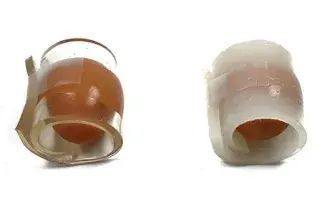
Can Biodegradable Materials Replace Plastic as Protective Food Packaging?
Many foods, such as fresh fruits, vegetables, or eggs, are packaged in plastic to protect them from damage during handling and transport. But is plastic the best choice? What if a more sustainable and biodegradable material could replace it? Researchers have begun exploring hydrogels—squishy materials that can hold a lot of water—as alternative packaging materials. In this science project, you ...
Carbonyls Redox: Aldehydes and Ketones
This module covers aldehydes and ketones as the substrates and products of redox reactions. Structure is explained with both Lewis structures and molecular orbitals to discuss mechanisms in the context of green chemistry. Students need to be familiar with organic functional groups, reactions, and proposing a mechanism.
The goal of this module is to understand the structure, reactions, and uses of ...
Careers Highlighting Green Chemistry and Sustainable Design in Chemical or Product Manufacturing Companies
This resource provides a list of videos and written stories that can be used in career exploration with students in secondary and higher education. Resources highlight careers that make use of green chemistry and sustainable design principles.
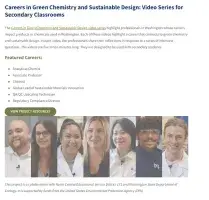
Careers in Green Chemistry and Sustainable Design: Video Series for Secondary Classrooms and Activity Guide
The Careers in Green Chemistry and Sustainable Design video series highlights professionals in Washington whose careers impact products or chemicals used in Washington. Each of these videos highlights a career that connects to green chemistry and sustainable design. In each video, the professionals share their reflections in response to a series of interview questions. The videos are five to ten ...
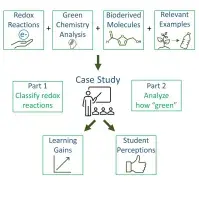
Case study assessment using biobased 5-hydroxymethylfurfural to teach redox reactions in undergraduate organic courses
Abstract: This paper addresses the development and evaluation of a case study designed to introduce both the core chemistry concepts of oxidation and reduction reactions as well as green chemistry within the undergraduate organic chemistry curriculum. The developed case study consisted of two parts that can be used in tandem or independently. Part 1 focused on calculating oxidation states and ...
Catalyzing the Development of Self-Efficacy and Science Identity: A Green Organic Chemistry CURE
To remain globally competitive, education in the United States must focus on retaining students in science, technology, engineering, and mathematics (STEM). As laboratory courses have the potential to be powerful attractors or deterrents to a field, developing effective laboratory pedagogies is important to retain students in STEM. A course-based undergraduate research experience (CURE) is one ...
Challenges and Opportunities for Implementing Green Chemistry in Nigerian Universities: Educational and Policy Perspectives
This study examines the emergence of green chemistry in Nigerian universities through analysis of perspectives from an eight-member focus group of experts in Nano chemistry, green chemistry, and chemistry education. The six-hour discussion evaluates awareness levels, implementation barriers, and future prospects. While participants recognize the importance of green chemistry, several challenges ...
CHE 1110 Chemistry, Biochemistry, and Society Outreach Project
Students sometimes struggle to see the direct connection between these concepts and real-life applications. The objective of a Chemistry learning community course (first year seminar style course) is to have student groups explore a topic from General Chemistry 1 through an accompanying learning community course (which could also be integrated directly into the General Chemistry course).In this ...
CHE 1110 Chemistry, Biochemistry, and Society UNSDG Presentation
In general and introductory chemistry courses, students typically learn the fundamental concepts of chemistry in isolation and often without connections to their interests or real life. The objective of a Chemistry learning community course (first year seminar style course) is to have student groups explore a topic from General Chemistry 1 through an accompanying learning community course. The ...
CHEM21 selection guide of classical- and less classical-solvents
This article provides a ranking of and selection guide for both classical and less classical solvents, based on existing solvent selection guides as well as a set of proposed criteria on Health, Safety and Environment aligned with the Global Harmonized System (GHS) and European regulations. More details are available in the linked article.
Full citation: Prat, D.; Wells, A.; Hayler, J.; Sneddon ...
ChemFORWARD Module Overview
The ChemFORWARD module aims to help instructors teach students how to use the ChemFORWARD platform to obtain hazard information for specific chemicals, and to identify safer chemicals to replace chemicals of concern in research and in product formulations.
The module is organized into two units. Each unit contains a unit overview, specific learning outcomes, course alignment, prerequisites ...
ChemFORWARD Module Unit 0: Background materials
These materials provide a brief overview of hazard, risk, personal protective equipment, chemical hazard assessment, chemical risk assessment, and chemical alternatives assessment for use in introductory courses where students have not previously been exposed to these topics. These materials are not meant to provide exhaustive coverage of the topics, but a general overview for an introductory ...