Alternatives to Dichloromethane (DCM) for Teaching Laboratories
Contributors



Summary
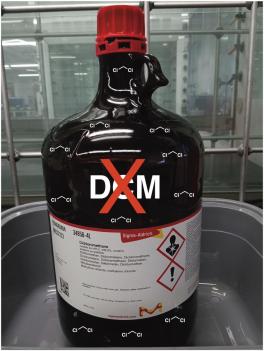
This is a Commentary published as open-access in the Journal of Chemical Education in 2025 by Angela Milo, Lijinghan Chen, Kyle Grice, and David Vosburg. It explains why teaching laboratory instructors may wish to avoid using the toxic and regulated solvent dichloromethane (DCM) and offers suggestions for how to eliminate its use and identify alternative solvents for reactions, extractions, and chromatography.
Full citation: Milo, A., Chen, L., Grice, K. A., & Vosburg, D. A. (2025). Alternatives to dichloromethane for teaching laboratories. Journal of Chemical Education, 102(6), 2261–2267. https://doi.org/10.1021/acs.jchemed.5c00106
Full citation: Milo, A., Chen, L., Grice, K. A., & Vosburg, D. A. (2025). Alternatives to dichloromethane for teaching laboratories. Journal of Chemical Education, 102(6), 2261–2267. https://doi.org/10.1021/acs.jchemed.5c00106
File (PDF, PPT, image, etc)
Link to external
Creative Commons License

This work is licensed under a Creative Commons Attribution-NonCommercial-NoDerivatives 4.0 International License.