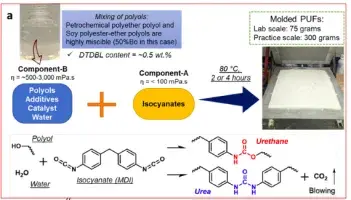
The soy industry plays a crucial role in sustainable development by utilizing soybeans as a renewable feedstock for food, fuel, and material applications. Research and innovations in this field, largely funded by the United Soybean Board, provide a wealth of potential curriculum content. This allows educators to engage students with real-world examples that illustrate the application of green chemistry principles and life cycle assessments in advancing sustainable technologies.
These research and innovations serving as potential curriculum content will support the development of case studies that emphasize the applications of green chemistry and sustainability. These case studies will align with the green chemistry and sustainability requirements of professional organizations such as the American Chemical Society and Royal Society of Chemistry to help prepare students for future careers in these fields.
This collection showcases various soy research and innovations, and best practices for adapting them into the curriculum. The aim is to raise awareness of soy as a versatile bio-based material while fostering increased interest in soy-based research and innovations and provide potential curriculum materials for case study development.
To submit a resource as part of this collection, use the GCTLC's online submission form.