- "Students are given the opportunity to assess chemical products and processes and design greener alternatives when appropriate."
- "Students understand and can evaluate the environmental, social, and health impacts of a chemical product over the life cycle of the product, from synthesis to disposal."
At the highest level of the ACS guidelines, students are expected to have a deeper understanding of and critical thinking skills around developing and designing greener chemical products and processes. This can include the various environmental, social and health aspects of a chemical product, in particular as it pertains to life cycle analysis.
GCTLC Library
Below are resources from the GCTLC library that are tagged with any of the following Green Chemistry Principles:
- #3 (Less Hazardous Chemical Syntheses)
- #4 (Design Safer Chemicals)
- #5 (Safer Solvents and Auxiliaries)
OR have been tagged with keyword "Life Cycle Assessment".
The variety of resources below should provide educators with numerous options to help tailor their lectures and courses with more green and sustainable chemistry content. However, if you have additional suggestions for resources, you can always submit them for inclusion in the GCTLC library, or you can post them in the forum "Green Chemistry Resources for Addressing the ACS Guidelines" on the GCTLC.

A Novel General Chemistry Experiment for Freshmen: Transgenic Soybean Detection Based on Microfluidic Molecular Fluorescence Spectroscopy Analysis
This educational resource introduces a microfluidic-based molecular fluorescence spectroscopy experiment designed for freshmen enrolled in General Chemistry courses. The experiment focuses on the detection of transgenic soybeans by analyzing nucleic acids using a centrifugal microfluidic platform combined with loop-mediated isothermal amplification (LAMP). It serves as an interdisciplinary ...
A Solvent-Free Baeyer–Villiger Lactonization for the Undergraduate Organic Laboratory: Synthesis of γ-t-Butyl-ε-caprolactone
The transformation of ketones into esters using peroxy acids was first reported in 1899. Since then, the Baeyer-Villiger oxidation has found itself an integral part of the organic chemist's toolkit. This modified Baeyer-Villiger is a great example of how a classic reaction can be made significantly greener. By eliminating the solvent you can avoid the hazards associated with dichloromethane (the ...
A survey of solvent selection guides
This published article provides an overview of the many solvent selection guides that had been published up until that point as well as a compilation of the data from the guides to allow for a ranked comparison of all solvents, allowing for a general grouping into four categories: recommended, problematic, hazardous and highly hazardous. Of the 51 solvents considered, 17 could not be unequivocally ...
Advanced Biomimicry Matching Game
In this interactive activity, students deepen their understanding of biomimicry and green chemistry by matching biological organisms to real-world technologies inspired by nature. Working collaboratively, students analyze how animals and plants solve challenges related to adhesion, energy efficiency, water capture, and materials performance without hazardous chemicals or excess waste. The activity ...
Advanced Organic Chemistry
This module is part of a collection of nine green chemistry teaching modules developed in the early 2000s by a team of faculty (Donna Narsavage-Heald, Trudy Dickneider, David Marx, Timothy Foley, Joan Wasilewski) led by Michael Cann at the University of Scranton and has been migrated to the GCTLC. The subjects of the modules are based on winners of the Green Chemistry Challenge Awards. The modules ...
Advancing sustainable chemistry education: Insights from real-world case studies
This article looks at the integration of innovative teaching methodologies through two case studies: “Plasticized Childhood” (exploring the environmental and health impacts of plastic toys) and “Unpacking Burgers” (a look into the complexities of plant-based meat alternatives). The Classroom Observation method was used to analyze and observe student interactions and learning outcomes while ...
Alcohols
This module uses simple alcohols as the primary examples to supplement the standard organic topics of physical properties, intramolecular forces, base stability, and an introduction to mechanism arrows. This module is designed to be taught in consecutive class periods of one week early in the Organic I term. Students need to be familiar with basic naming and hybridization. There are three units: 1 ...
Alternative Solvents for Green Chemistry
This book provides an overview of solvents and their greener alternatives, including in applications such as synthetic chemistry, purification, analytical chemistry, materials science, catalysis, and more. It also provides some of the latest evidence from the time of research into "greener" solvents, including switchable solvents and biosolvents, as well as areas of interest such as naturally ...
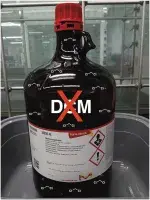
Alternatives to Dichloromethane (DCM) for Teaching Laboratories
This is a Commentary published as open-access in the Journal of Chemical Education in 2025 by Angela Milo, Lijinghan Chen, Kyle Grice, and David Vosburg. It explains why teaching laboratory instructors may wish to avoid using the toxic and regulated solvent dichloromethane (DCM) and offers suggestions for how to eliminate its use and identify alternative solvents for reactions, extractions, and ...
Amines in Pharmaceutical Synthesis
This module explores the synthesis of amines with a focus on the reductive amination reaction. Numerous examples from the discovery and commercial manufacturing of pharmaceuticals are included. After an introduction to traditional reductive amination methods, students evaluate the traditional methods using green chemistry principles and systems thinking approaches. Students also compare ...