- "Students are given the opportunity to assess chemical products and processes and design greener alternatives when appropriate."
- "Students understand and can evaluate the environmental, social, and health impacts of a chemical product over the life cycle of the product, from synthesis to disposal."
At the highest level of the ACS guidelines, students are expected to have a deeper understanding of and critical thinking skills around developing and designing greener chemical products and processes. This can include the various environmental, social and health aspects of a chemical product, in particular as it pertains to life cycle analysis.
GCTLC Library
Below are resources from the GCTLC library that are tagged with any of the following Green Chemistry Principles:
- #3 (Less Hazardous Chemical Syntheses)
- #4 (Design Safer Chemicals)
- #5 (Safer Solvents and Auxiliaries)
OR have been tagged with keyword "Life Cycle Assessment".
The variety of resources below should provide educators with numerous options to help tailor their lectures and courses with more green and sustainable chemistry content. However, if you have additional suggestions for resources, you can always submit them for inclusion in the GCTLC library, or you can post them in the forum "Green Chemistry Resources for Addressing the ACS Guidelines" on the GCTLC.
Green Chemistry University Course: Lecture 17 - Working Without Solvents
In this class, students will learn about the possibilities of performing chemical transformations without the presence of an organic solvent. Students will explore alternative methodologies ranging from supercritical fluids to solventless conditions. The goal of this lecture is not only to inform students of alternative methodologies but also to provide real examples of how these approaches are ...
Green Chemistry University Course: Lecture 18 - Exam 2
Exam 2 and Exam 2 Answer Key
This course was developed and authored by:
Philip Coish
Kimberly Chapman
Paul Anastas
Seon Augusto Ferreira
Karolina Mellor
Amy Cannon
Derrick Ward
Green Chemistry University Course: Lecture 20 – Green Analytical Chemistry
In this class, students will learn about Green Analytical Chemistry. The lecture includes information about analytical method assessment, including tools and techniques for assessing the greenness of methods. The lecture addresses sample preparation, analytical techniques, and methods including chromatography and spectroscopy, and Process Analytical Technology (PAT).
This course was developed and ...
Green Chemistry University Course: Lecture 23 – Molecular Toxicology
This lecture introduces Absorption, Distribution, Metabolism, and Excretion (ADME) concepts and how chemists can take advantage of physicochemical parameters like logP, molecular weight, and vapor pressure to redesign molecules that won’t absorb into the body, limit distribution, and facilitate metabolism and excretion. These concepts are reinforced by an in-class exercise that explores potential ...
Green Chemistry University Course: Lecture 24 – Designing Future Products with Reduced Toxicity
This lecture continues to explore different approaches to hazard minimization by changing molecular design. After several practical examples and a case study, students will learn about current methods that scientists use to assess chemical toxicity on a large scale. In vivo and In vitro studies are discussed.
This course was developed and authored by:
Philip Coish
Kimberly Chapman
Paul Anastas ...
Green Chemistry University Course: Lecture 25 and 26: Safe Chemical Design Game
The last two lectures, lecture 25 and lecture 26, allow students to explore safer chemical design and ADME through an educational online computer game. The game encourages students to think like professional chemical designers and to develop a chemical product with respect to function and improved human and environmental health. The developed worksheet leads students through the game challenges ...
Green Chemistry University Course: Lecture 27 – Exam 3: Final Exam
Exam 3: Final Exam and Exam 3: Final Exam Answer Key
This course was developed and authored by:
Philip Coish
Kimberly Chapman
Paul Anastas
Seon Augusto Ferreira
Karolina Mellor
Amy Cannon
Derrick Ward

Green chemistry, sustainability, and environmental impact
In this video, Dr. Loyd Bastin introduces green chemistry and discusses how changing the way we think about chemistry processes can address our most pressing environmental issues. Bastin explains how these environmental issues disproportionally effect communities of color and provides examples that demonstrate the long history of environmental racism. He then explores how green chemistry and ...
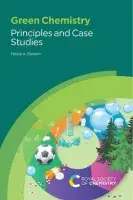
Green Chemistry: Principles and Case Studies
Green chemistry as a discipline is gaining increasing attention globally, with environmentally conscious students keen to learn how they can contribute to a safer and more sustainable world. Many universities now offer courses or modules specifically on green chemistry – Green Chemistry: Principles and Case Studies is an essential learning resource for those interested in mastering the subject ...
Green Goggles: Designing and Teaching a General Chemistry Course to Nonmajors Using a Green Chemistry Approach
A novel course using green chemistry as the context to teach general chemistry fundamentals was designed, implemented and is described here. The course design included an active learning approach, with major course graded components including a weekly blog entry, exams, and a semester project that was disseminated by wiki and a public symposium. Results include self-reports of gains in knowledge ...