- "Students are given the opportunity to assess chemical products and processes and design greener alternatives when appropriate."
- "Students understand and can evaluate the environmental, social, and health impacts of a chemical product over the life cycle of the product, from synthesis to disposal."
At the highest level of the ACS guidelines, students are expected to have a deeper understanding of and critical thinking skills around developing and designing greener chemical products and processes. This can include the various environmental, social and health aspects of a chemical product, in particular as it pertains to life cycle analysis.
GCTLC Library
Below are resources from the GCTLC library that are tagged with any of the following Green Chemistry Principles:
- #3 (Less Hazardous Chemical Syntheses)
- #4 (Design Safer Chemicals)
- #5 (Safer Solvents and Auxiliaries)
OR have been tagged with keyword "Life Cycle Assessment".
The variety of resources below should provide educators with numerous options to help tailor their lectures and courses with more green and sustainable chemistry content. However, if you have additional suggestions for resources, you can always submit them for inclusion in the GCTLC library, or you can post them in the forum "Green Chemistry Resources for Addressing the ACS Guidelines" on the GCTLC.
Polymer Chemistry
This module is part of a collection of nine green chemistry teaching modules developed in the early 2000s by a team of faculty (Donna Narsavage-Heald, Trudy Dickneider, David Marx, Timothy Foley, Joan Wasilewski) led by Michael Cann at the University of Scranton and has been migrated to the GCTLC. The subjects of the modules are based on winners of the Green Chemistry Challenge Awards. The modules ...
Polymers and Green Chemistry
The purpose of this lab is to introduce students to some basics of the chemistry of polymers. Polymer chemistry is often an afterthought in the General Chemistry curriculum, but polymers are very much present in students’ lives. The lab introduces the relationship between molecular structure (e.g., branched vs. linear, bulky vs small side groups) and bulk properties (e.g., flexibility). This lab ...
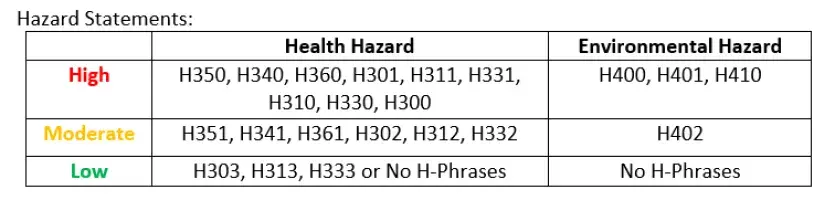
Pre-Lab- Understanding Chemical Hazard and Laboratory- Formula of a Hydrate
In this laboratory experiment, students will perform a hazard assessment for different hydrates and rank them according to their human and environmental hazards. Students will also determine the percent water in an unknown hydrate and use that information to determine the formula of a hydrate.
Preparation and Testing of Buffers
The purpose of this lab is to give students experience in the practical preparation of buffers and exploring buffer properties. Students will prepare aqueous solutions with specific concentrations of acids and bases, and use pH meters to examine the pH of these buffers. The buffer capacity of the prepared buffers will also be measured.
Featuring contributions from Tamara Fitzjarrald.
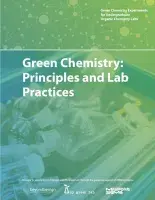
Primer for the Guide - Green Chemistry: Principles and Lab Practices
This resource has been developed through a collaboration of Beyond Benign, MilliporeSigma, My Green Lab, and a network of chemistry faculty. Green Chemistry: Principles and Lab Practices is an introductory primer for the Guide to Green Chemistry Experiments for Undergraduate Organic Chemistry Labs*, and contains a variety of resources, tools, and references for practicing green chemistry in ...
Principle 3: Design less hazardous chemical syntheses
Learn the twelve principles of green chemistry taught during The Green Chemistry & Engineering Student Workshop on June 17, 2013 in Washington D.C. The course content was provided by ACS-GCI. These videos were produced by the Western States Pollution Prevention Network. Other sponsors included NPPR and Washington State Department of Ecology.
Principle 4: Design Safer Chemicals and Products
Learn the twelve principles of green chemistry taught during The Green Chemistry & Engineering Student Workshop on June 17, 2013 in Washington D.C. The course content was provided by ACS-GCI. These videos were produced by the Western States Pollution Prevention Network. Other sponsors included NPPR and Washington State Department of Ecology.
Principle 5: Safer Solvents and Auxiliaries
Learn the twelve principles of green chemistry taught during The Green Chemistry & Engineering Student Workshop on June 17, 2013 in Washington D.C. The course content was provided by ACS-GCI. These videos were produced by the Western States Pollution Prevention Network. Other sponsors included NPPR and Washington State Department of Ecology.
Promoting political and civic engagement in a nonmajor sustainable chemistry course
A non-majors chemistry course with a sustainability focus was developed as part of an effort to embed sustainability throughout the curriculum at Widener University. Using the ACS textbook Chemistry in Context, we sought to reinforce the concept of chemistry as the “central science” in solving big issues relating to energy and the environment. What distinguishes this course from traditional ...
Protein N‐Glycans: Incorporating Glycochemistry into the Undergraduate Laboratory Curriculum
The article "Incorporating Glycochemistry into the Undergraduate Laboratory Curriculum: Isolation and Analysis of Soybean Glycoprotein β-Conglycinin" addresses the underrepresentation of glycoscience in undergraduate biochemistry labs by introducing a multiweek experimental series. Students isolate β-conglycinin from soy flour and analyze it using SDS-PAGE and mass spectrometry. They also apply a ...