- "Students are given the opportunity to assess chemical products and processes and design greener alternatives when appropriate."
- "Students understand and can evaluate the environmental, social, and health impacts of a chemical product over the life cycle of the product, from synthesis to disposal."
At the highest level of the ACS guidelines, students are expected to have a deeper understanding of and critical thinking skills around developing and designing greener chemical products and processes. This can include the various environmental, social and health aspects of a chemical product, in particular as it pertains to life cycle analysis.
GCTLC Library
Below are resources from the GCTLC library that are tagged with any of the following Green Chemistry Principles:
- #3 (Less Hazardous Chemical Syntheses)
- #4 (Design Safer Chemicals)
- #5 (Safer Solvents and Auxiliaries)
OR have been tagged with keyword "Life Cycle Assessment".
The variety of resources below should provide educators with numerous options to help tailor their lectures and courses with more green and sustainable chemistry content. However, if you have additional suggestions for resources, you can always submit them for inclusion in the GCTLC library, or you can post them in the forum "Green Chemistry Resources for Addressing the ACS Guidelines" on the GCTLC.
07 - Environmental Fate, Persistence, and Biodegradation (Toxicology for Chemists - Module 7)
This module contains an introduction to the concepts of fate, persistence, and biodegradation. Students will learn about: classes of molecules that persist in the environment; different types of degradation and their critical role in the environment and society; and parameters that affect biodegradation rate. Part II of this module is a full case study entirely based on the Deepwater Horizon oil ...
08 - Environmental Toxicology (Toxicology for Chemists - Module 8)
This module serves as an introduction to the principles of environmental toxicity: air pollution, water pollution, and chemical transport and fate. Using these materials, students will learn examples of pollutants and their effects on human health and the environment through multiple case studies and in-class discussions. These lecture slides comprise mostly case studies and provide a good outlook ...
09 - Ecotoxicology (Toxicology for Chemists - Module 9)
This module provides an introduction to ecotoxicology, an overview of exposure and thresholds, an overview of the main concepts and scales of ecotoxicology, and some applications of ecotoxicology. Using these materials, students will learn: the history of ecotoxicology; why ecotoxicology is important to sustainability; effects on levels of biological organization; relations to hazard and risk ...
10 - Predictive Toxicology (Toxicology for Chemists - Module 10)
This module provides an overview of computational methods to predict the toxicity of chemicals. Students will learn an updated overview of the latest methods that have been successfully applied to predict toxic effects of chemicals, in addition to understanding the outlook towards at the nexus of computational sciences and toxicology. Particular emphasis is placed on carbon-based toxicants ...
11 - Structure-Activity Relationships (Toxicology for Chemists - Module 11)
This module connects the structure of molecules to their activity in biological systems. Students will be able to: identify physicochemical properties related to ADME; identify and rationalize relationships between physiochemical properties and biological activity in different species; apply pre-screening tools for acute and chronic human and ecological endpoints based on physicochemical ...
12 - Case Studies, ChemToxTidbits, “Grab Bag” Folder (Toxicology for Chemists - Module 12)
Don’t have much time to prepare your lectures? Don’t know where to start with incorporating toxicology into existing class lectures or assignments? Not sure if you’re ready to adopt a full module? Do you just want access to the case studies, in-class assignments, homework assignments, and ChemToxTidbits slides? This folder contains all of these materials in a format easily accessible to you so ...

12 Principles of Green Chemistry
This is a poster of the 12 Principles of Green Chemistry. The poster can be printed out in varying sizes and is designed to be used as a teaching tool in a classroom, laboratory or manufacturing setting.
Please select the file below based on your audience location. For those in North America please use the MilliporeSigma file, for those outside North America please use the international Merck ...
3D-Printable Biobased Eutectogels Based on Soybean Oil and Natural Deep Eutectic Solvents for Underwater EMG Recording
This study presents the development of 3D-printable biobased eutectogels that integrate acrylated epoxidized soybean oil (AESO) with natural deep eutectic solvents (DES) to create hydrophobic, conductive soft materials suitable for underwater electromyography (EMG) recording. The research explores the tunability of the eutectogels' mechanical, electrochemical, and water-repellent properties by ...
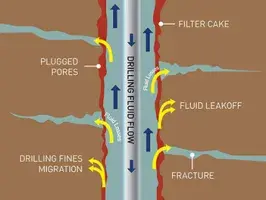
A Comparative Study of Diesel Oil and Soybean Oil as Oil-Based Drilling Mud
This study evaluates the performance of high oleic soybean oil (HOSO) as a sustainable alternative to diesel oil in oil-based drilling muds, with implications for both lubricant and biodiesel applications. The research compares the rheological, filtration, and thermal properties of drilling fluids formulated with HOSO versus conventional diesel oil.
Full citation: Agwu, O. E., Okon, A. N., & Udoh ...
A convenient guide to help select replacement solvents for dichloromethane in chromatography
This article overviews a study of the eluting properties of greener solvent systems as a replacement for dichloromethane in chromatography and chromatographic purification. A library of "drug-like" compounds was used to determine the efficacy and potential application of the greener solvent systems for purification. In particular, various mixtures of 3:1 EtOAc:EtOH in hexanes were found to have ...