K-12 Community Favorites

Image
cover image for the collection with yellow-green text on a purple background with a scientist in a lab coat pointing to the text

Presenting a curated collection of K-12 resources, handpicked based on educators' choices. This dynamic selection will be periodically reviewed and updated with new materials to ensure it meets the evolving needs of our community. Dive in and discover the resources, tools and activities that your fellow educators love.


Interested in submitting your own resources, class activities or curriculum materials to the GCTLC? Read more in our handy "Guide for How to Submit Resources to the GCTLC". Ready to submit something now? Use the Resource Submission form to get started!
A Green(er) Redox Reaction

Summary

Green chemistry is an approach to practicing chemistry that strives to reduce or eliminate the use and generation of hazardous substances. This focus on safety and environmental responsibility must always refer to a baseline measure, meaning that reactions can never be “green” but instead can always be “greener”.

This lab provides a great example of a greener approach to teaching reduction ...

Type
Laboratory experiment

A guidebook for sustainability in laboratories

Summary

This guidebook aims to improve lab users’ everyday practices to become more sustainable. Specifically, this guidebook provides practical suggestions on how to effectively use lab instruments and resources and how to acquire data. We provide advice to labs covering disciplines such as biology, chemistry, computational science, engineering, life sciences, materials sciences, medicine, pharmacy, and ...

Type
Assessments, Case studies, Videos (e.g., tutorials, presentations), Books

Acids, Bases, and pH

Summary

This lab is intended to introduce students to the concepts of acids, bases, and pH. Students determine the best suitable natural indicators to test the pH of the various household products and substances.

Type
Laboratory experiment

Biomimicry Matching Game

Summary

Biomimicry is the science and art of emulating nature’s best biological ideas to solve human problems. The natural world is made up of very good green chemists. Consider animals and how they make their own shelter and get all the food they need from other things in nature. This is all done without having to use any gas or electricity or taking more than they need, and they produce little waste or ...

Type
Laboratory experiment

Climate Change Chemistry

Summary

This curriculum unit is focused on exploring the scientific concepts of climate change, specifically within the field of chemistry. The unit aims to provide students with a foundational understanding of the chemistry involved in climate change models, predictions, and policy. The focus is on removing political connotations associated with the term “greenhouse gases” and restoring its scientific ...

Type
Laboratory experiment

Exploring Wavelength: A Quantitative and Qualitative Analysis of LEDs

Summary

In this lab, students will explore the relationship among wavelength, frequency and energy, as they observe white light and LED light sources, using a spectroscope. Students will also observe the effect of color filters on white light and LED light sources, using a spectroscope. Students will qualitatively explore the effectiveness of several filters, through analysis of their predictions versus ...

Type
Laboratory experiment

GREEN CHEMISTRY AND SUSTAINABLE SCIENCE: A Green Approach to Sustainable STEM in K-12 - Chapter 1: Welcome to Green Chemistry Education

Summary

New York has been transitioning to updated New York State Science Learning Standards (NYSSLS), based on the Next Generation Science Standards (NGSS). As members of the Green Chemistry Professional Learning Team (GC-PLT), we have been developing curricula for our own use that reflect the updated standards and elements of instructional best practice, such as storylines, driving questions, and ...

Type
Laboratory experiment, Lesson summaries, Books

GREEN CHEMISTRY AND SUSTAINABLE SCIENCE: A Green Approach to Sustainable STEM in K-12 - Chapter 2: Human and Environmental Impacts

Summary

The impacts of chemicals on humans and the environment are a critical consideration for green chemistry practices. The three lessons in this chapter provide opportunities for students to consider the potential impacts of chemicals in the products they use and are exposed to in their lives. The objective of the lessons in this chapter is to make these considerations explicit for students. In doing ...

Type
Activities/Technology (e.g., in-class activities, online games, hands-on activities/manipulatives, outreach, virtual tools, etc.), Lesson summaries, Books

GREEN CHEMISTRY AND SUSTAINABLE SCIENCE: A Green Approach to Sustainable STEM in K-12 - Chapter 3: Structure of Atoms and Molecules

Summary

Typical chemistry instruction engages students with a variety of chemicals to understand the structure of atoms and molecules. Our goal in this chapter is to provide three example lessons that illustrate how to engage students with concepts of structure through design, modeling, and phenomena that use less toxic chemicals and limit student and teacher exposure. Several of these lessons are good ...

Type
Laboratory experiment, Activities/Technology (e.g., in-class activities, online games, hands-on activities/manipulatives, outreach, virtual tools, etc.), Lesson summaries
Keywords

GREEN CHEMISTRY AND SUSTAINABLE SCIENCE: A Green Approach to Sustainable STEM in K-12 - Chapter 4: Chemical Reactions

Summary

The core of green chemistry principles is understanding how to make informed choices when designing chemical reactions that account for atom economy, human and environmental safety, and the life cycle of products. To engage students in learning about chemical reactions with a green chemistry perspective, we present the three lessons in this chapter intended to:
• Show how to actively engage ...

Type
Activities/Technology (e.g., in-class activities, online games, hands-on activities/manipulatives, outreach, virtual tools, etc.), Lesson summaries, Books
Keywords

GREEN CHEMISTRY AND SUSTAINABLE SCIENCE: A Green Approach to Sustainable STEM in K-12 - Chapter 5: Curriculum Unit

Summary

This chapter is meant to illustrate what a unit-level learning experience can look like as students engage in concepts related to structure and chemical reactions. While the prior chapters provided a set of lessons around a specific topic at different grade spans, this middle school unit illustrates how students can engage in a variety of investigations and modeling to explore the molecular nature ...

Type
Activities/Technology (e.g., in-class activities, online games, hands-on activities/manipulatives, outreach, virtual tools, etc.), Lesson summaries, Books
Keywords

Make It and Break It: Bioplastics from Plant Starch with Incorporation of Engineering Principles

Summary

Developed by:
Richard Harris, Carla Ahrenstorff
Gracye Theryo, Aaron Johnson, Cassie Lydon, Cassie Javner,
Jane Wissinger*

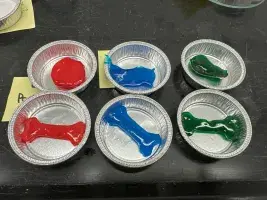
Three types of household plant starches (corn, potato, and tapioca) and additives are used to prepare inexpensive, safe, and non-toxic polymeric materials of varying physical properties. The renewable plastic films are explored using tensile testing in order to compare and ...

Type
Laboratory experiment, Lesson summaries

Sustainable Invention: An Exploration of Bioplastics - Module 1

Summary

*This is Module 1 of a 4 Module, multi-lesson unit. Sustainable Invention: An Exploration of Bioplastics is a unit that has been developed to introduce middle school students and educators to sustainable invention and green chemistry principles. The Sustainable Invention unit seeks to address the challenges of integrating invention education into middle school science curricula and advance STEM ...

Type
Laboratory experiment, Activities/Technology (e.g., in-class activities, online games, hands-on activities/manipulatives, outreach, virtual tools, etc.), Assessments

Tie-Dyeing with Tannins and Iron

Summary

This laboratory experiment uses tannins from acorns and iron from rusted metal to color cotton fabrics. It explores renewable dyes, oxidation and reduction reactions, and the creation of organometallic coordination polymers from waste resources. It's suited for introductory and non-major students but can be extended into upper-level undergraduate courses as well.

It's well suited for the fall ...

Type
Laboratory experiment, Assessments