- "Students are given the opportunity to assess chemical products and processes and design greener alternatives when appropriate."
- "Students understand and can evaluate the environmental, social, and health impacts of a chemical product over the life cycle of the product, from synthesis to disposal."
At the highest level of the ACS guidelines, students are expected to have a deeper understanding of and critical thinking skills around developing and designing greener chemical products and processes. This can include the various environmental, social and health aspects of a chemical product, in particular as it pertains to life cycle analysis.
GCTLC Library
Below are resources from the GCTLC library that are tagged with any of the following Green Chemistry Principles:
- #3 (Less Hazardous Chemical Syntheses)
- #4 (Design Safer Chemicals)
- #5 (Safer Solvents and Auxiliaries)
OR have been tagged with keyword "Life Cycle Assessment".
The variety of resources below should provide educators with numerous options to help tailor their lectures and courses with more green and sustainable chemistry content. However, if you have additional suggestions for resources, you can always submit them for inclusion in the GCTLC library, or you can post them in the forum "Green Chemistry Resources for Addressing the ACS Guidelines" on the GCTLC.
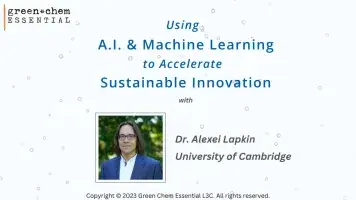
Using AI & Machine Learning to Accelerate Sustainable Innovation
If we are to meet the demands of sustainability and climate change in the time needed, green chemistry advancements will have to happen faster than traditional methods of discovery can often make possible.
In this episode of Green Chem Essential, with host James Rea, Dr. Alexi Lapkin and his fellow researchers describe how they are trying to use the combined power of machine learning & ...
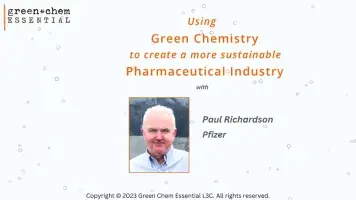
Using Green Chemistry to Create a More Sustainable Pharmaceutical Industry
The medicines we rely on may look tiny when we hold them in our hands, but the manufacturing processes that create those medicines happen at a very large scale. Anything that makes those processes cleaner, safer, and more efficient can have a tremendous impact on efforts to fight climate change and create a more sustainable future.
Hear how green chemistry is helping to make those changes ...
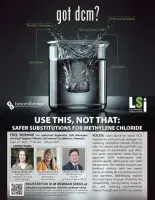
Webinar: "Use This Not That: Safer Substitutions for Methylene Chloride"
Two-hour webinar that took place on Friday, September 27th, 2024 and explored the latest TSCA regulations in the U.S. and practical strategies for replacing methylene chloride (DCM) in labs. Experts discussed DCM’s use, challenges of substitution, and effective green alternatives. Learn how to approach DCM replacement with solvent-specific alternatives and safer lab practices. The webinar included ...
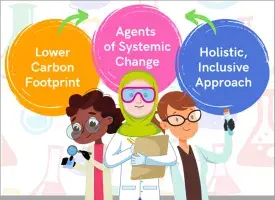
Women in Green Chemistry and Engineering: Agents of Change Toward the Achievement of a Sustainable Future
Both green and sustainable chemistry and engineering can broadly reach and interconnect different aspects of our society. To promote peace and protect our planet by 2030, the systemic change enabled by the holistic and inclusive perspective of green and sustainable chemistry and engineering is essential. Within this context, women and girls occupy a unique position: (1) The consequences of climate ...